Key takeaways
- Bill transitioned from journalism to data visualization after realizing his passion for it.
- AI can create visuals but lacks understanding of the data's context.
- Stakeholders often don't know what they need, requiring effective communication.
- The subconscious influences stakeholders' requests for data representation.
- Defining metrics should be tailored to specific business needs and contexts.
- Cash management is crucial for business sustainability and success.
- Bill's book 'Stakeholder Whispering' addresses how to understand client needs.
- Teaching and public speaking are Bill's primary focuses moving forward.
- AI-generated content has its place, but human insight is irreplaceable.
- Mentorship has significantly shaped Bill's professional journey.
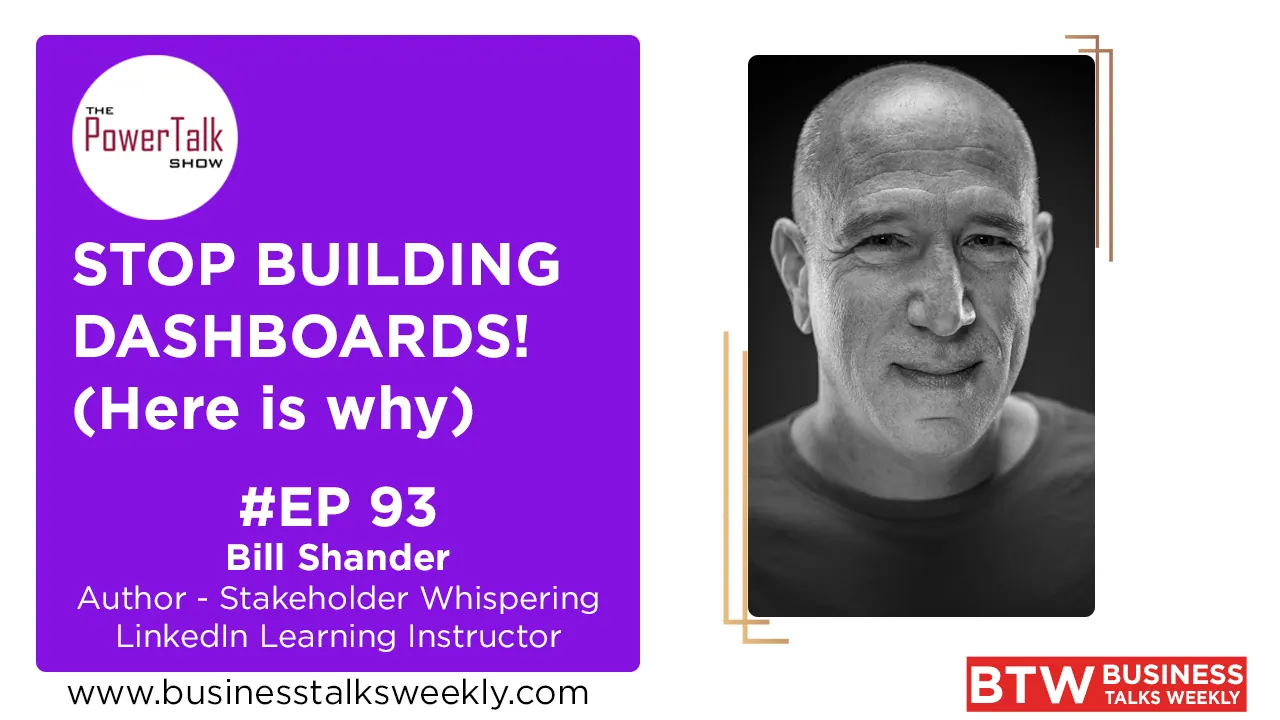
In the world of data visualization and information design, it is crucial to bridge the gap between what stakeholders think they need and the real insights that can drive their decisions. On this episode of The Power Talk Show, we sit down with Bill Shander, the brilliant mind behind BeeHive Media and the author of “Stakeholder Whispering.” With over 30 years of experience in transforming data into compelling stories, Bill uncovers the nuances of stakeholder communication, emphasizing that the journey from raw data to actionable insights requires a deeper understanding of human psychology.
Finding Your Path: Bill’s Journey to Information Design
Bill’s journey is an inspiring one. After a brief stint as a ski bum and working as a journalist, he quickly transitioned into the world of web development. It was here that he discovered his true passion: helping clients effectively communicate their data through visual storytelling. Over the past decade, Bill has shifted his focus exclusively towards information design and storytelling, realizing the profound impact clear data representation can have on decision-making.
In his time working with renowned clients and teaching global workshops, including recent sessions in Dubai and Abu Dhabi, Bill has gathered rich insights that he generously shares in his courses on LinkedIn Learning, engaging over 2 million learners globally. His commitment to enhancing communication through data visualization has positioned him as a leading voice in the sector.
The Power of Asking the Right Questions
“How do we visualize data effectively?” This question echoes the broader inquiry: “How do we truly understand what our stakeholders need?” During our conversation, Bill points out that often, stakeholders are not clear about their actual requirements. They may simply request a dashboard because that’s the standard practice, but without the right context, such requests can miss the mark. Bill argues for the necessity of strategic conversations, highlighting that the human element in understanding data is irreplaceable.
Moreover, Bill emphasizes the importance of probing questions. Instead of just delivering what’s requested, effective leaders delve deeper. For example, asking a stakeholder, “What decisions do you need to base on this data?” can reveal far more than a superficial request for visuals.
This approach cultivates a richer understanding of the underlying needs and leads to more impactful solutions.
The Intersection of AI and Data Communication
As AI continues to evolve, Bill addresses the role of technology in data visualization, particularly in creating visuals rapidly. However, he cautions that while AI can produce graphics, it lacks the ability to understand context. Humans are vital in ensuring that the visuals communicate the intended message and meet the needs of the audience. The collaboration between human insight and AI efficiency can redefine the landscape of data communication but understanding the stakeholder’s needs will forever remain a human endeavor.
Lessons Learned from the Entrepreneurial Journey
Reflecting on over three decades of experience, Bill shares candidly about the challenges he faced when founding his own company. Notably, his initial struggles with cash management taught him invaluable lessons. Regardless of the business’s growth level, understanding cash flow is paramount. “At the end of the month, you must pay the bills,” he says, underscoring the need for entrepreneurs to maintain a close eye on their financial health.
He also highlights the importance of mentorship, revealing how observing more seasoned colleagues shaped his business acumen. It’s not only about finding someone to emulate; it’s also about learning what not to do.
The Road Ahead for Stakeholder Whispering
As Bill continues to share his insights through workshops, online courses, and podcasts, he remains committed to elevating the art of stakeholder communication. His book, “Stakeholder Whispering,” is a testament to this mission, aimed at equipping professionals with the tools necessary to navigate the complexities of client relationships across various sectors.
As a generative force in the data storytelling space, Bill Shander empowers knowledge workers to embark on meaningful conversations with their stakeholders, unlocking deeper insights and enhancing overall decision-making.
More from the PowerTalk archive
If this conversation was useful, two more episodes pick up related threads: Nikki Stone (Founder, YQ) and Alex Sanfilippo (Founder, PodMatch). For every episode on this theme, browse our leadership and scaling episodes.
If you are interested to feature as a guest in The PowerTalk Show and spread your product/service or brand across our audience, please reach out to us on press@businesstalksweekly.com
In Bill’s words
“The subconscious is driving the bus.”
“There's no magic metric.”
“Cash is king.”
Frequently asked questions
Why do stakeholders often not know what they actually need?
Bill Shander explains that stakeholders often request something familiar, like a standard dashboard, without fully articulating the decisions they actually need to make — asking "what decisions do you need to base on this data?" reveals far more than the initial request.
Can AI replace human data visualization experts, according to Bill Shander?
No — Bill argues AI can produce graphics quickly but lacks understanding of context, so human insight remains essential to ensure visuals actually communicate the intended message to the right audience.
What is Bill Shander's book "Stakeholder Whispering" about?
It equips professionals with tools to navigate the complexities of client relationships and better understand what stakeholders really need from data and communication.
What lesson did Bill Shander learn from founding his own company?
He points to cash management as one of his biggest early lessons — regardless of how much a business is growing, understanding cash flow and being able to pay the bills each month is paramount.