Key takeaways
- Jay started his career as an entrepreneur in 1994.
- The name '144K' is inspired by a biblical reference to 144,000 servants.
- 90% of revenue goes back into community-serving programs.
- Their partners are diverse and not limited by demographics.
- Partnerships and scaling logistics are a significant challenge for growth.
- Businesses often overlook the impact side of their operations.
- The Collective is capped at 144,000 active partners to preserve alignment.
- Technology and AI are used to expand reach without losing the human touch.
- Real success stories highlight the tangible impact of the model.
- Jay believes entrepreneurs should focus on solving people's problems first.
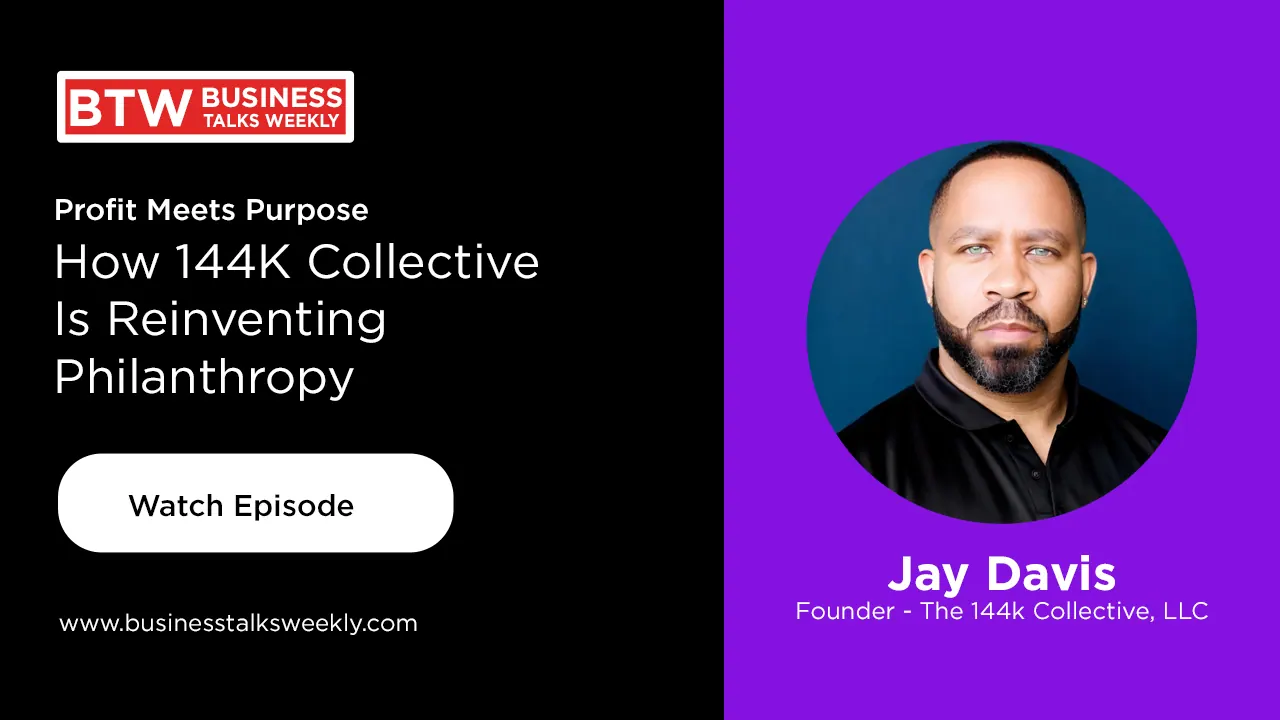
In a world where for-profit and nonprofit often exist at odds, Jay Davis stands boldly in the middle—with a new model that blends capitalism with compassion. On the latest episode of PowerTalk Show, Davis, the visionary behind The 144K Collective, shares how he’s building a for-profit business with a philanthropic soul—and why impact-driven entrepreneurs are the future of commerce.
From Rejection to Revolution
Jay’s journey began with a bold business plan submitted to Apple in 1994—a plan that was rejected but ignited a spark in him. That spark became a flame as he dove into entrepreneurship, first helping veterans start businesses, then evolving into broader philanthropic micro-enterprises. Over time, his purpose sharpened: create a for-profit structure that could deliver measurable impact to real people.
The culmination of that vision is The 144K Collective, a collaborative movement of active partners who invest time, energy, and resources into solving everyday problems in their communities—while earning returns.
The Meaning Behind the Name
The name “144K” draws inspiration from a biblical reference to 144,000 servants of God, a symbol of service, integrity, and purpose. “I believe we’re all here to serve humanity,” says Jay. “This is God’s work—helping people.”
It’s not just a spiritual vision. It’s a practical one, too.
How The 144K Collective Works
At its core, the 144K Collective is:
- For-profit: 90% of revenue goes back into community-serving programs.
- Purpose-driven: Every initiative begins with an identified local need.
- Partner-powered: Each partner is active, not passive. They’re part of decision-making, not just funding.
From providing free anesthesia for underserved patients in Texas to creating content that gets sponsored and reinvested into community upliftment, The 144K Collective is reshaping how business is done.
Biggest Challenges
As Davis explains, scaling isn’t just about money—it’s about logistics, legal boundaries, and human relationships. The group is capped at 144,000 active partners, each vetted for alignment with the mission. Managing communication, alignment, and engagement at this scale is a monumental task. But Jay is committed: “We can’t just accept passive capital. That would violate SEC rules and, more importantly, our core values.”
Tech, Media & AI for Good
The Collective embraces digital tools to amplify its reach:
- AI is used for meeting summaries, content structuring, and communication.
- Live events and media streaming are on the horizon.
- The Collective is exploring 24/7 livestreaming to showcase real-time impact.
Jay sees AI as a valuable tool—not to replace humans, but to help them focus on higher-level work and better storytelling.
Case Study: From Couch to Comeback
One story stands out. A former Dallas police officer, dismissed over a taser incident, found himself homeless. A partner referred him to 144K. What began as a small request for groceries turned into a $2,000 grant and steady brand ambassador gigs that helped him earn $35–40/hour. “It changed his life,” Jay says. “And that’s what we’re here to do.”
Jay’s parting words are a call to action:
“Solve people’s problems first—then figure out how to make money doing that. There’s money in philanthropy. Billionaires know it. Entrepreneurs need to learn it too.”
More from the PowerTalk archive
If this conversation was useful, two more episodes pick up related threads: Leïla Lahbabi (Founder, Mind Impact Academy) and Michael Straza (Founder, Straza Consulting). For every episode on this theme, browse our leadership and scaling episodes.
In Jay’s words
“We can't just accept passive capital. That would violate SEC rules and, more importantly, our core values.”
“I believe we're all here to serve humanity.”
“It changed his life. And that's what we're here to do.”
Frequently asked questions
What is The 144K Collective?
The 144K Collective, founded by Jay Davis, is a for-profit business built around community impact, with 90% of revenue going back into local, purpose-driven programs, run by active partners rather than passive investors.
What does the name "144K" mean?
It draws inspiration from a biblical reference to 144,000 servants of God, reflecting Jay Davis' view of the business as an act of service, and the group is capped at 144,000 active partners to preserve alignment with its mission.
Why doesn't The 144K Collective accept passive investors?
Jay Davis says accepting passive capital would violate SEC rules given the structure of the group, and more importantly would run counter to the Collective's core value of every partner being actively involved in decision-making, not just funding.
What is Jay Davis' advice for impact-driven entrepreneurs?
"Solve people's problems first, then figure out how to make money doing that." He argues there is real money in philanthropy done well, and that entrepreneurs should learn what billionaires already know about combining purpose with profit.