

Home » PowerTalk Show » Escaping the Golden Handcuffs – A Therapist’s Guide to Finding Your Soul-Aligned Career
Escaping the Golden Handcuffs – A Therapist’s Guide to Finding Your Soul-Aligned Career
In this episode, we had the privilege of speaking with Rachel Speckman, a veteran career coach and founder of Made for More Coaching. With a rich background spanning 15 years in marketing, a decade helping startup founders, and five years as a therapist, Rachel has a rare combination of business acumen and deep psychological insight. She specializes in guiding professionals who feel unfulfilled by their careers to find work that aligns with their unique potential.
Key Takeaways
- ✓ You can pivot within your current job.
- ✓ Most people are only 20-40% happy in their careers.
- ✓ It's important to assess your career satisfaction regularly.
- ✓ Burnout often develops slowly over time.
- ✓ Technology can both help and hinder our mental health.
- ✓ Finding the right coach is crucial for personal growth.
- ✓ A solution-oriented mindset is more rewarding than problem-focused thinking.
- ✓ Community support is vital for career transitions.
- ✓ Career choices can be temporary, seasonal, or lifelong.
- ✓ Self-awareness is key to understanding your professional needs.
Rachel's philosophy is both refreshing and practical. She is quick to clarify that her mission isn't just about quitting a job; it's about finding fulfillment. "You do not have to quit your job," she said. "You can pivot within." She advises a career audit to start: identifying what you love and what lights you up every day. The goal is to do more of that, ideally within your current role, but if not, to start brainstorming a new path.
Beyond Passion: The Psychology of a Fulfilling Career
Rachel challenged the common misconception that a soul-aligned career is simply about following your passion. While passion is a part of it, she explained that it’s more about the skills you enjoy using—and where and with whom you use them. Over time, many professionals find themselves stuck in a "rinse and repeat" cycle, performing tasks that don't bring them joy, simply because it’s what their career has become. She encourages a deeper self-reflection: Do you enjoy using your skills? If not, what would a more fulfilling use look like?
To help her clients, Rachel uses an "internal resume" exercise. She asks people to reflect on the moments in their career they are most proud of, even if no one else saw them. This exercise uncovers the energy and satisfaction that a person is truly seeking, guiding them toward a career that can replicate that feeling.
Overcoming Burnout and “The Golden Handcuffs”
Rachel shared a stark statistic: most people seek career coaching when they are only 20-40% happy in their jobs. She drew a powerful analogy, asking, "Would you stay in a house that was 60% falling apart?" Most people wouldn’t, yet they remain in careers that are equally unfulfilling, often because of "golden handcuffs"—the financial and social security that make change feel impossible.
She emphasized that this prolonged unhappiness takes a significant toll on mental and physical health. Burnout, she explained, is not a sudden event but a "slow roll," a gradual accumulation of small, ignored problems. The key to preventing it is ongoing self-awareness and paying attention to your well-being, rather than waiting for a quick fix.
While discussing the role of technology in well-being, Rachel acknowledged that tools like ChatGPT and meditation apps can be helpful. However, she warned against analysis paralysis and the fine line between being supported and being overwhelmed. She asserted that while technology can be an incredible aid, it can never replace human connection, which is crucial for accountability and support on the journey to change.
The Future of Coaching: Finding Solutions Together
Rachel is currently focused on scaling her services to help more people escape their soul-sucking jobs and find careers they love. She acknowledged the challenges of the crowded coaching marketplace but leans on her unique background as a therapist to help people navigate the psychological barriers to change. She aims to create a community where people can support one another and see the success stories of others who have walked a similar path.
When it comes to choosing a coach or a mentor, Rachel offered two core principles:
- Find someone who has "walked the walk." Choose a coach who has not only talked about career pivots but has successfully made them.
- Look for results. The true measure of a coach's effectiveness isn't a flashy website but the tangible success stories of their clients.
Solution-Oriented Mindset
Toward the end of the conversation, Rachel shared a powerful piece of advice she received from a former boss: "I have $100 in my pocket. And I'm going to give anybody who comes to me with a problem $1 and anybody who comes to me with a solution $100. You decide how much money you want to make."
This quote perfectly encapsulates Rachel's philosophy: she believes we live in a solution-oriented world, and her mission is to help people get unstuck and become part of that solution. She’s not a guru with a magic bullet; she is a compassionate guide who is "here to get down in the weeds and do it with you."
In This Episode
00:00
Introduction to Soul-Aligned Work
02:49
Understanding Career Satisfaction
05:35
Navigating Technology and Mental Health
07:47
Burnout and Its Causes
10:36
Finding the Right Coach
12:59
Solution-Oriented Mindset
“You do not have to quit your job.”
— Rachel Speckman, Founder, Made for More Coaching
“You don't have to stay that unhappy.”
— Rachel Speckman, Founder, Made for More Coaching
“There is no get rich quick.”
— Rachel Speckman, Founder, Made for More Coaching
About the Guest
Rachel Speckman
Career Coach & Founder, Made for More Coaching
Rachel Speckman is a veteran career coach and founder of Made for More Coaching. She brings a rare combination of business acumen and psychological insight: 15 years in marketing, a decade helping startup founders, and five years working as a therapist. She helps professionals who feel unfulfilled in their careers find work that aligns with their unique potential — often without needing to quit their job at all.
Frequently Asked Questions
What is a "soul-aligned career," according to Rachel Speckman?
It's not simply about following your passion — it's about identifying the skills you genuinely enjoy using, and where and with whom you use them, rather than staying stuck repeating tasks that no longer bring you joy.
Do you have to quit your job to find career fulfillment?
No — Rachel Speckman starts every client with a career audit to identify what already lights them up, with the goal of doing more of that within their current role first, before considering a full pivot.
What are "golden handcuffs" in a career context?
The financial and social security that makes leaving an unfulfilling job feel impossible, even when someone is only 20-40% happy in their role — the point at which Rachel says most people seek career coaching.
How should someone choose a career coach or mentor?
Rachel Speckman offers two principles: find someone who has actually "walked the walk" of a successful career pivot themselves, and look at their clients' tangible results rather than a polished website.
The Host
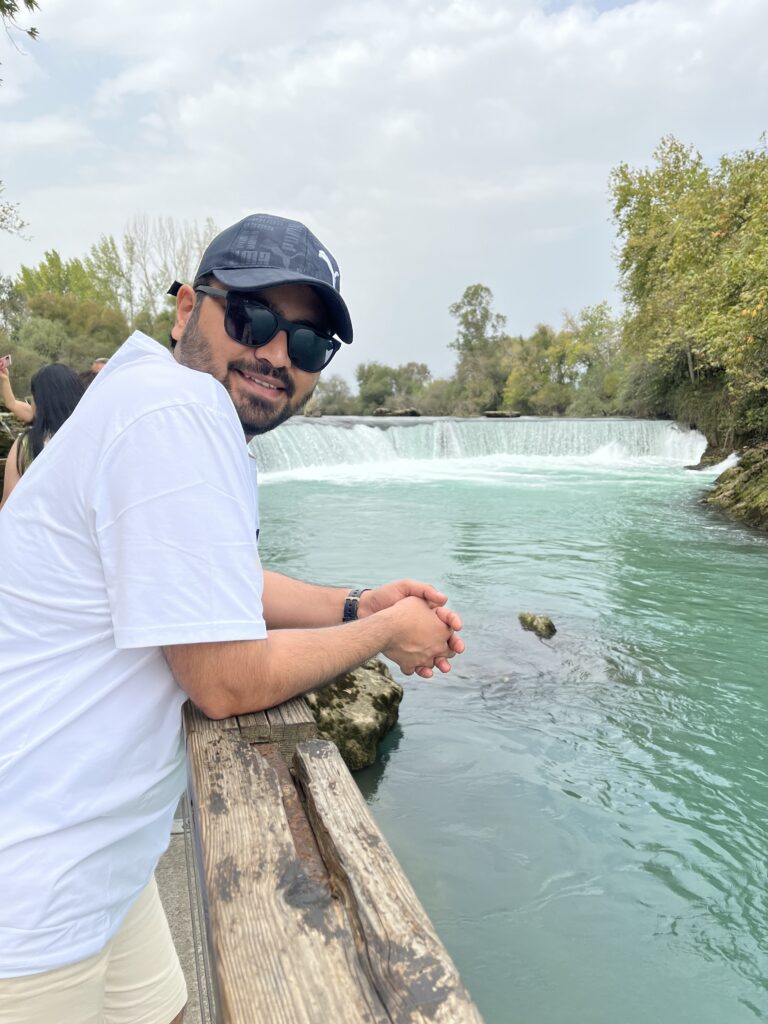
Navin Shetty didn't set out to build a media company
After a decade advising founders on go-to-market strategy across Dubai, Riyadh and Mumbai, Navin kept noticing the same gap: the most useful conversations he had happened off the record, over coffee, after the panel ended. The PowerTalk Show is that off-the-record conversation, recorded on purpose.
He hosts every episode himself — no rotating co-hosts, no outsourced pre-interviews. Guests get one rule going in: nothing is off-limits except numbers they’re legally required to keep private.
Under Business Talks Weekly, the show now anchors a small editorial operation producing written deep-dives, sponsor features and syndicated audio distributed across six platforms.
Work with the show
Reach a focused B2B audience across the UAE, Middle-East, and Global— or join the conversation as a guest.
Watch More Conversations Here
Explore insightful discussions and stories.
BROWSE BY TOPIC
Every conversation, organized by what matters to you
107 interviews with the founders, operators and investors shaping the UAE — grouped by the topics our listeners search for most.
AI & Tech Founders
Builders shipping the tools reshaping how business gets done — and the infrastructure behind them.
FinTech & Wealth
Banking, payments & wealth strategy — how capital actually moves across the GCC and beyond.
Leadership & Scaling
Culture, hiring and the operating lessons behind teams that scale without breaking.
Sales, Marketing & Growth
Go-to-market playbooks, growth tactics and the campaigns actually moving revenue.