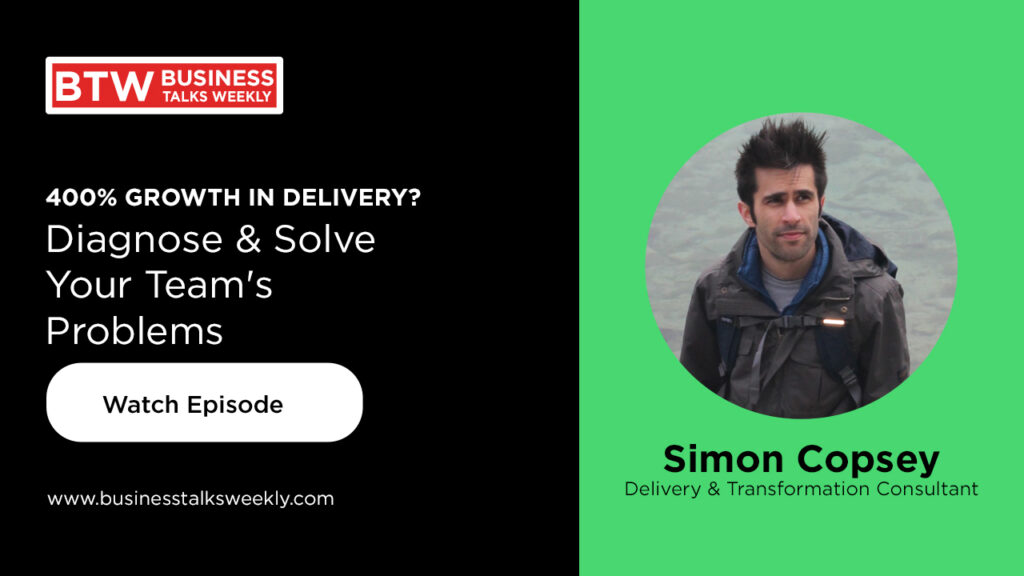
In this episode, we had a fascinating conversation with Simon Copsey, a delivery and transformation consultant who specializes in helping senior leaders untangle complex organizational knots. With a career that has evolved from a hands-on developer to a strategic advisor, Simon uses a blend of the scientific method and modern management theory to help companies flourish.
Simon began by sharing his journey from a software developer to a consultant. He explained that his interest gradually shifted from fixing technical bugs to understanding what was happening behind the screen—the organizational and environmental factors that hinder progress. He views these issues much like a doctor diagnosing a patient. Symptoms like high staff turnover, unhappiness, and slowing delivery are often indicators of just a few underlying problems. By focusing on these root causes, he can help create the right conditions for all the symptoms to disappear.
The Problem is Never the People
When asked about the common challenges he helps executives solve, Simon made a powerful and reassuring point: the problem is rarely the people. He stressed that most organizations hire incredible, talented individuals. The real obstacles are environmental—the rules, processes, and systems that companies unintentionally create and which get in the way of their own staff. His work involves diagnosing these issues to help companies improve the speed and quality of their software delivery.
He also provided a nuanced perspective on the role of Artificial Intelligence (AI) in this process. While acknowledging AI’s potential as a specific solution, he noted that his work often precedes the technical fixes. He acts as a “general practitioner” who focuses on the initial diagnosis, which often reveals that the solution isn’t a new technology, but simply a change in a rule or a process that has become outdated.
The Art of Scaling: From Code to Culture
Simon offered an insightful breakdown of the challenges in scaling a product from a developer’s and an organizational perspective. He pointed out that developers often spend more time in between coding than actually writing code. This is because organizations, which exist to foster cooperation, often create unintended conflicts. A classic example is incentivizing different departments—like developers, testers, and operations—with conflicting metrics. This can lead to work getting stuck and the time between writing code and delivering a completed product getting longer.
The key to successful scaling, he argued, is to continually ask “why” behind every process and every rule. He advises leaders to question if a process, like a Change Approval Board, is still serving its intended purpose or if it has become an obstacle.
He also emphasized the critical importance of a feedback loop with external sources—customers, vendors, and partners. He drew a parallel between effective product design and internal organizational processes. While we accept that there’s uncertainty in understanding what a user needs, we are often less accepting of internal uncertainty and delays. A successful organization, according to Simon, is one that embraces this uncertainty both externally and internally, fostering a culture of curiosity and adaptability.
The Power of Humility and Passion
Simon’s passion for his work shone through when he discussed the challenges of delivering difficult news to clients. He spoke with a sense of humility, stating that his idea is never better than the client’s—he is simply there to provide clarity. He sees a client’s resistance as a personal failure to communicate effectively, rather than a client’s flaw. This approach, he explained, is rooted in the fact that an organization’s issues often stem from a deeply held assumption by its leaders. Unwinding these beliefs, he noted, can be challenging but also incredibly rewarding. If an organization’s only barrier is a tweakable assumption, the results can be astounding and rapid.
When asked to share a proud achievement, Simon again deferred credit to the leaders he worked with. He shared a story of helping an organization improve its delivery speed by 40% simply by reducing work-in-progress. In another instance, he helped a client increase their delivery capacity by 400% without adding a single person. He emphasized that he is just the coach, and the real credit goes to the leaders who do the hard work of transformation. This a testament to his client-first, highly humble, and impactful approach.
About the Host, Navin Shetty
I’m Navin Shetty, a B2B business leader, entrepreneur, and the host of The PowerTalk Show, where I unpack the strategies that fuel business success. I specialize in crafting data-driven strategies that supercharge lead generation, elevate brand awareness, and drive customer acquisition for both startups and established businesses. As the founder of Business Talks Weekly, my online publication, I curate actionable insights and trends that empower business leaders and innovators to stay ahead of the curve. It’s more than just content—it’s a community where ideas spark and sustainable growth takes root. If you’re ready to take your B2B growth to the next level or explore innovative investment opportunities, let’s connect and turn your ideas into impactful success stories.
If you’re interested in featuring as a guest on The PowerTalk Show and spreading your product/service or brand across our audience, please reach out to us on press@businesstalksweekly.com.